
ChM. Ts. Dr. Siti Qurratu’ Aini develops Green Shale Swelling Inhibitor for shale swelling in the oil and gas industry
PEKAN, 17 July 2025 – Concerns over environmental pollution caused by the use of non-environmentally friendly chemicals in the oil and gas industry became the starting point for the development of an eco-friendly formulation to replace the use of potassium chloride (KCl) in drilling operations.
This innovation was developed by a lecturer from the Faculty of Chemical Engineering Technology and Processes (FTKKP), Universiti Malaysia Pahang Al-Sultan Abdullah (UMPSA), ChM. Ts. Dr. Siti Qurratu’ Aini Mahat.
She developed the Green Shale Swelling Inhibitor, a green inhibitor formulated from a mixture of polymers and potassium citrate for controlling shale swelling.
The study was also carried out with FTKKP lecturer Dr. Agi Augustine Aja and Universiti Teknologi Petronas (UTP) lecturer Dr. Ismail Mohd Saaid, with additional knowledge and equipment support provided by Polygon Synergy Venture Sdn. Bhd.
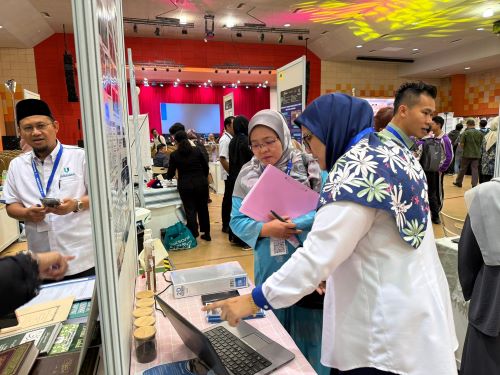
According to her, this innovation aims to replace the conventional KCl solution in water-based mud (WBM) systems used during oil drilling operations.
“Although KCl is inexpensive, it contributes to chloride pollution in water sources and increases the risk of stuck-pipes during drilling operations.
“Therefore, we developed an environmentally friendly solution that not only performs better but also helps reduce environmental impact,” she explained.
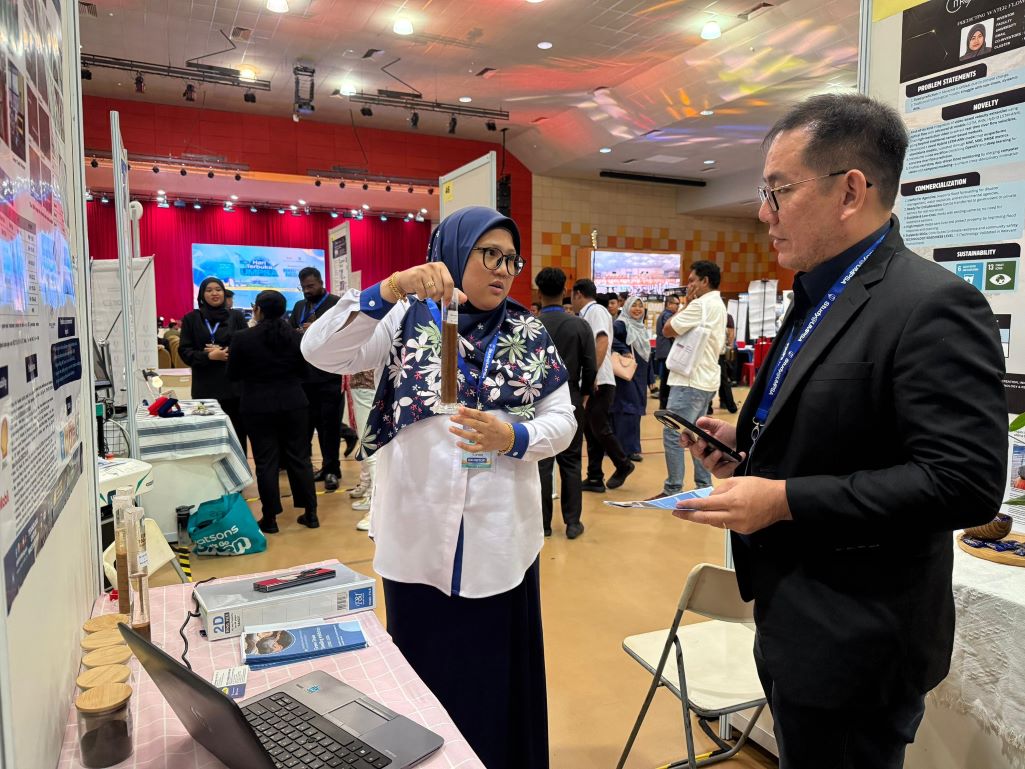
“This research began in 2022 under grant RDU220376, and by early 2025, it had reached the laboratory demonstration level (TRL 5), making it eligible to compete in the Creation, Innovation, Technology and Research Exposition (CITREX) 2025, where it won the gold medal and the Special Award (Centered Laboratory Award),” she said.
She explained that the polymer used is polycationic, meaning it can adsorb onto the surface of smectite clay to reduce the double layer.
“At the same time, the citrate ions from potassium citrate form complexes with interlayer cations to stabilize the structure and prevent water ingress.
“As a result, the shale expansion rate can be significantly reduced from 54 percent to just 32 percent, helping to thin the mud-cake and reduce fluid loss.
“The use of this inhibitor has the potential to reduce overall management and operating costs by up to 49 percent, making it not only a greener option but also a more economical one,” she added.
She further mentioned that the ultimate goal of this study is to support the Sustainable Development Goals (SDGs) and waste-to-wealth initiatives by reducing chloride and solid waste.
“We look forward to collaborating with industry partners to implement pilot projects at onshore and offshore well sites.
“We also plan to file for a patent or trademark for this product as a step forward in expanding its benefits to the oil and gas industry and contributing to more sustainable technologies,” she said.
In related fields, she is also developing ionic liquids as heavy oil reduction agents and green inhibitors to control silicate formation.
This innovation proves that an environmentally friendly approach can have a significant impact in solving technical challenges in the industry while preserving environmental well-being.
By: Nur Hartini Mohd Hatta, Centre for Corporate Communications
Translation by: Aminatul Nor Mohamed Said, UMPSA Career Centre (UMPSACC)
- 84 views