
BeeCrobes, UMPSA researchers’ innovation, discovers potential of stingless bee honey as natural probiotic source
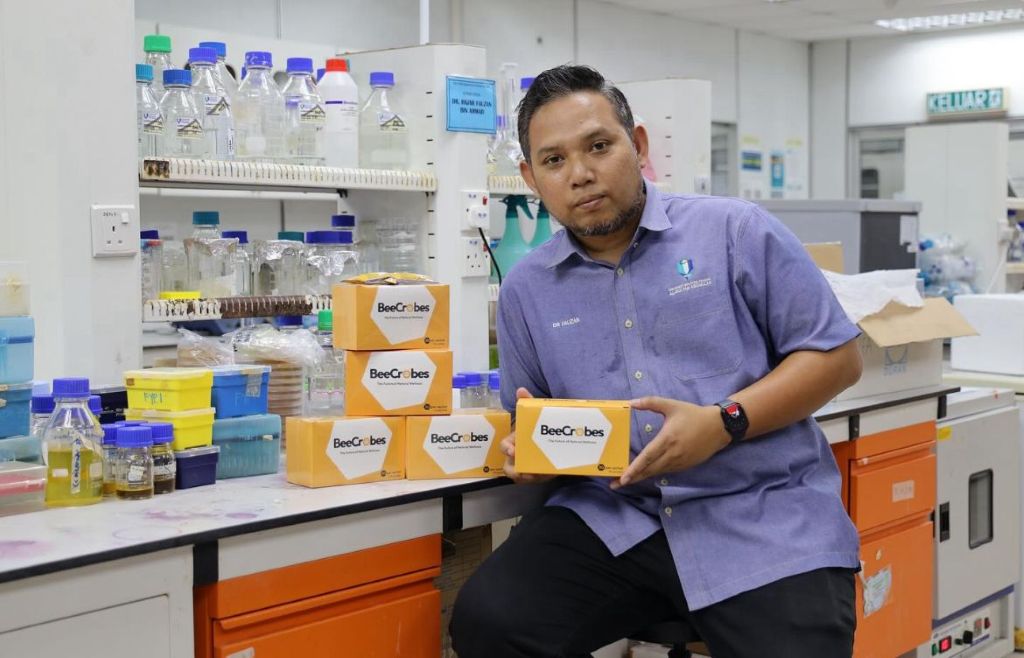
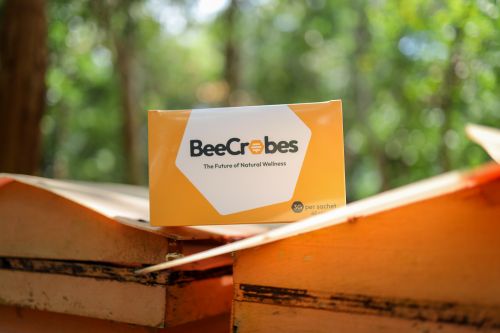
PEKAN, 15 October 2025 – Researchers from Universiti Malaysia Pahang Al-Sultan Abdullah (UMPSA) successfully developed the first probiotic supplement product based on local stingless bee honey, named BeeCrobes.
BeeCrobes is the result of research that focuses on exploring the potential of stingless bee honey as a natural probiotic source.
According to the project’s principal researcher, Associate Professor Ts. Dr. Hajar Fauzan Ahmad, lecturer at the Faculty of Industrial Sciences and Technology (FSTI), the study was conducted to evaluate the content and probiotic benefits found in stingless bee honey produced from Rimba Lestari UMPSA through a modern biotechnological approach.
“Stingless bee honey was chosen because it contains beneficial microorganisms that can support gut health, immunity, and body metabolism.
“Through this study, we aim to elevate the value of local honey through science and research, subsequently making it a natural alternative that is safe and supported by strong scientific evidence.
“This research began at the end of 2023 and was supported through the Special Project Grant (SPU250104) approved by the UMPSA Management and Innovation Committee (JKPI),” he said.
He added that this project was carried out to explore the potential of UMPSA’s stingless bee honey as a natural probiotic source through the processes of isolation, characterisation, and evaluation of probiotic microorganisms.
“The final BeeCrobes product formulation was then developed in collaboration with B-Crobes Laboratory Sdn. Bhd., which also served as an industry partner and the main sponsor of the project through a research and development (R&D) funding grant.
“This product is now in the promotional and commercialisation potential assessment phase after the research was completed at the end of August 2025.
“The initial idea for this study arose from a simple question: ‘Why does pure honey not contain sucrose?’ which led to the exploration of how microorganisms in stingless bee honey can regulate sugar content,” he said.
The basic study was initiated by FSTI final-year student, Muhammad Fahmi Khairil, during the 2023/2024 academic session, and continued by Research Officer, Saidatul Akasha Sufian, under his supervision.
He added that through this research, beneficial bacteria from the genera Fructobacillus and Lactobacillus were identified as playing a role in converting sucrose into trehalulose, a rare sugar with a low glycaemic index, low insulin response, and non-cariogenic properties.
“Trehalulose also provides sustained energy without rapidly increasing blood sugar levels.
“The BeeCrobes product functions by supplying probiotic bacteria that help maintain gut microbiota balance, inhibit the growth of harmful bacteria, and naturally support the immune system.
“It is specially formulated to support metabolic health and overall well-being of users,” he explained.
He added that the ultimate goal of this research is to develop a local probiotic product that is safe, effective, and supports gut and metabolic health in the community.
This discovery also has the potential to support the local stingless bee honey industry and the food biotechnology sector by expanding the use of stingless bee honey in high-value nutraceutical products.
Associate Professor Ts. Dr. Hajar Fauzan further added that to expand the research’s impact, the research team also plans to explore the application of BeeCrobes in various lifestyle products, such as probiotic beverages, natural energy supplements, and microbiome-based personal care products.
“Follow-up studies will evaluate the stability and efficacy of probiotic bacteria and trehalulose in various formulations to enhance their therapeutic value and market potential.
“In addition to industrial collaboration, the researchers plan to establish strategic relationships with local health agencies for certification, standardisation, and large-scale commercialisation purposes, so that the community can more widely utilise the benefits of BeeCrobes.
“We hope that this research not only adds value to the scientific community but also brings tangible benefits to society and industry through local products that are safe and scientifically proven,” he said.
Apart from BeeCrobes, the same research team previously developed Triumph Medico, a pathogen-detection kit based on Oxford Nanopore technology that enables faster, more efficient detection of microorganisms for applications in microbiology and molecular diagnostics.
This achievement reflects his continued efforts in translating laboratory research outputs into real-world applications that have an impact on industry and society.
He is also one of the representatives of the university start-up company, TML Lab Sdn. Bhd., which developed the technology Codes to Detect Pathogenic Bacteria from Whole-Genome Data, licensed for commercialisation, demonstrating the success of UMPSA researchers in translating research outcomes into practical industrial applications.
He attended the Technology Licensing Agreement Document Exchange Ceremony, officiated by the Pahang State Executive Councillor for Investment, Industry, Science, Technology, and Innovation, Yang Berhormat Dato’ Mohamad Nizar Dato’ Sri Mohamad Najib, in conjunction with the Closing Ceremony of Festival Idea@Pahang 2025 recently.
By: Nur Hartini Mohd Hatta, Centre for Corporate Communications
Translation by: Dr. Rozaimi Abu Samah, UMPSA Press
- 156 views