
Young UMPSA researcher Ts. Dr. Nurizzatul develops Malaysia’s first Modular Atmospheric Boundary Layer Wind Tunnel, boosting research on High-Rise Buildings and Sustainable Cities
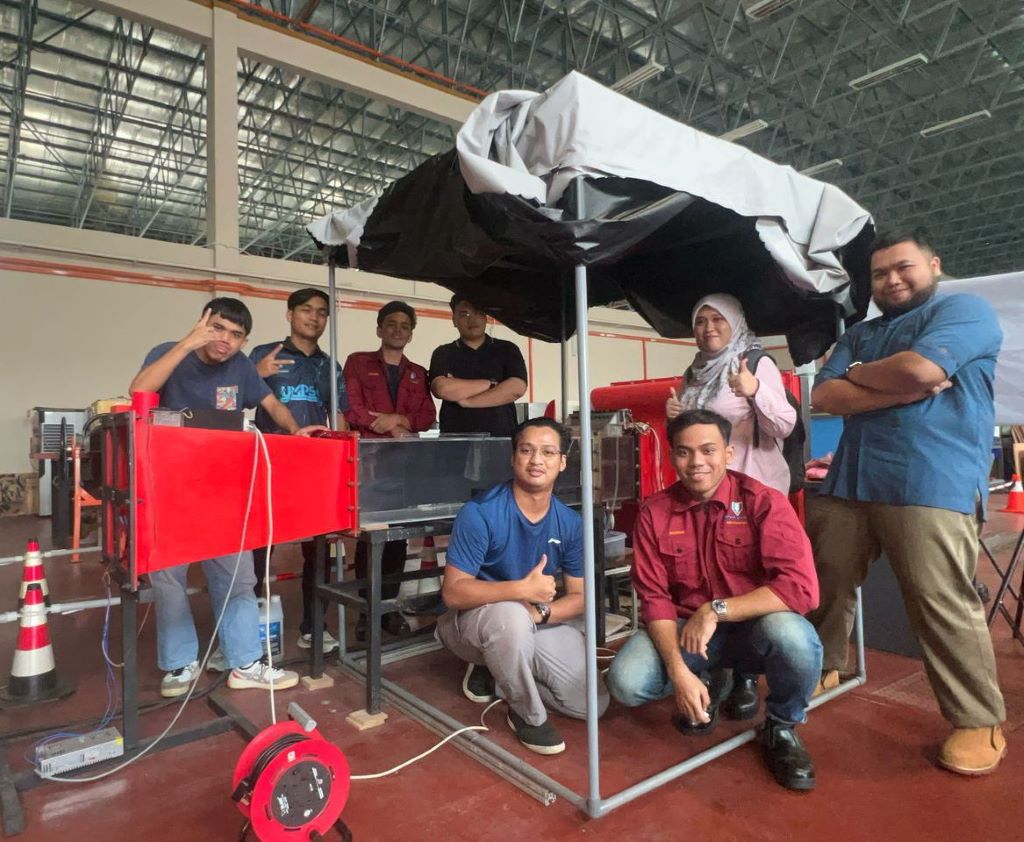
PEKAN, 6 October 2025 – A young researcher from the Faculty of Mechanical and Automotive Engineering Technology (FTKMA), Universiti Malaysia Pahang Al-Sultan Abdullah (UMPSA), Ts. Dr. Nurizzatul Atikha Rahmat, 36, made history by successfully developing the country’s first small-scale and modular Boundary Layer Wind Tunnel (BLWT), fully designed in-house.
This high-technology facility, named the Small-Scale and Modular Quasi-Atmospheric Boundary Layer Wind Tunnel, is an innovative facility specially designed to understand how airflow around buildings affects the comfort and well-being of urban residents.
It is also used to evaluate wind responses on high-rise buildings through facade pressure analysis.
In addition, the facility supports research on the Urban Heat Island (UHI) phenomenon and natural urban ventilation to improve quality of life, thermal comfort, and human well-being in modern urban environments.
For skyscraper projects exceeding 200 metres in height, wind tunnel test reports are crucial to ensure structural safety, pedestrian comfort, and compliance with international technical standards.
According to this Selangor-born researcher, the development of the BLWT stemmed from the need to provide a small-scale wind testing facility capable of replicating real atmospheric boundary layers at a significantly lower cost than large-scale commercial facilities.
“Our study found that wind flow along the sides of tall buildings produces accelerated velocities within the atmospheric layer where human activities occur.
“This phenomenon can endanger pedestrian safety, while the slow wind flow at the back of the building (wake flow) can persist for several times the building’s height.
“This situation reduces natural ventilation and increases heat and air pollutant concentration in surrounding areas, making it one of the main contributors to the UHI phenomenon,” she explained.
Dr. Nurizzatul Atikha, who holds a Doctor of Philosophy (PhD) in Energy and Environmental Engineering from Kyushu University, Japan, explained that her experience conducting BLWT experiments there inspired her to develop a similar facility at UMPSA upon returning to Malaysia.
“Realising that there are only two BLWT facilities in Malaysia, one academic at the Malaysia–Japan International Institute of Technology (MJIIT–UTM) and another commercial facility in Kuala Lumpur, I was determined to develop a more accessible small-scale version for researchers and students,” she said.
With the support of the 2019 Fundamental Research Grant Scheme (FRGS), received only four months after joining UMPSA, as well as several internal RDU UMPSA grants, she successfully developed two BLWT units, namely the Quantitative BLWT and the Qualitative BLWT, which were fully completed in 2023.
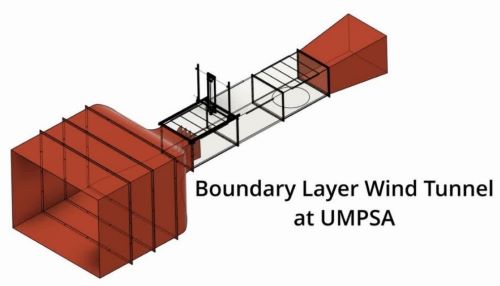
Quantitative BLWT
The Qualitative BLWT is used for wind flow visualisation using the Enhanced Smoke Wire Technique, while the Quantitative BLWT is equipped with a hot-wire anemometer and a high-precision (0.1 mm) automatic traverse system that enables the acquisition of wind velocity profiles with high accuracy.
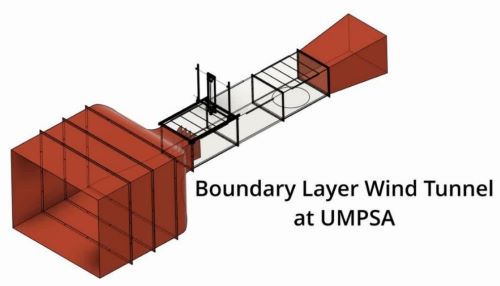
Qualitative BLWT
Interestingly, this automatic system innovation was developed entirely in-house at UMPSA with an estimated cost of RM300,000 to RM400,000, far lower than commercially purchased BLWT systems from abroad, which can cost between RM1.5 and RM2 million.
Currently, she said, this BLWT is being used in various research projects, including assessments of pedestrian comfort and safety based on international standards such as Lawson, Davenport, and Melbourne; studies on facade pressure and structural loads of high-rise buildings; analyses of natural ventilation and urban airflow; and simulations of air pollutant dispersion and the UHI phenomenon.
“The development of the BLWT at UMPSA is not merely an academic achievement, but also a practical solution to real-world challenges in the construction and urban planning industries.
“It helps predict wind impacts before construction begins, thereby improving safety, comfort, and efficiency in public space design,” she explained.
Apart from internal research, the facility has also attracted interest from external agencies, such as SIRIM QAS International Sdn. Bhd., to establish strategic collaboration in testing and setting technical standards for high-rise buildings in Malaysia.
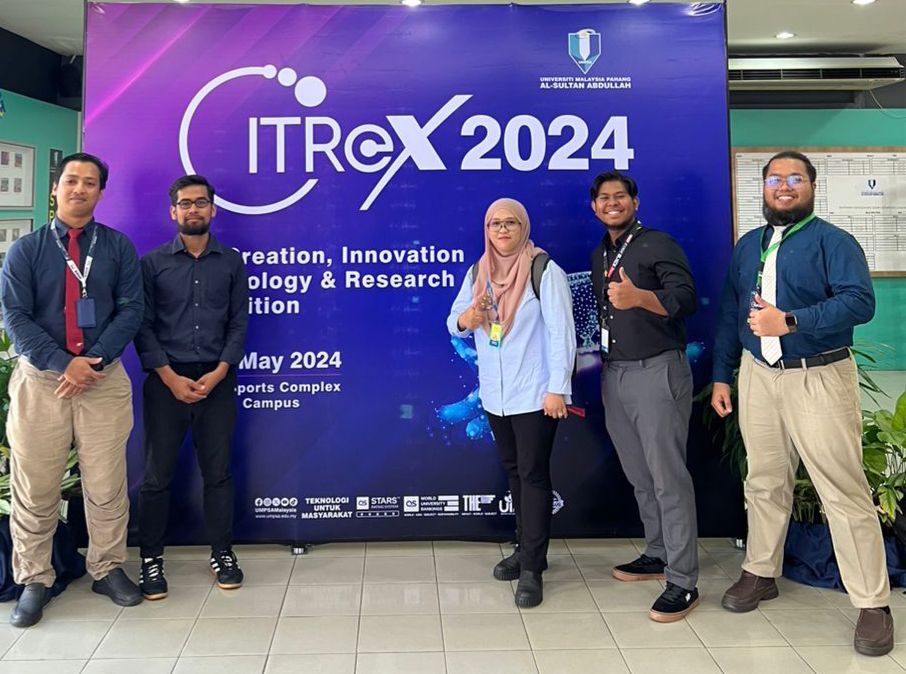
Since its early development phase, the BLWT project has achieved various recognitions at both national and international levels, including a Silver Medal (CITREX 2024), Bronze Medals (CITREX 2023 and 2022), more than 12 Scopus- and Web of Science (WoS)-indexed journal and book chapter publications, and the Cendekia Bitara (Gold Medal) Award for WoS-indexed publications.
Among other research products developed is the Enhanced Smoke Wire Technique for visualising airflow around buildings in the qualitative BLWT study.
She further explained that this innovation was developed entirely from scratch using simple components such as a guitar tuner and fishing sinker weights as tensioning mechanisms to produce thicker, longer-lasting, and more stable smoke for flow visualisation.
“We also designed an automatic control dripping valve system using a pump to maintain a consistent flow of the water-based solution compared to manual control methods used by previous researchers.
“This method is far more practical and modern than conventional systems found in literature.
“The combination of these two innovations not only enhances flow visualisation clarity and experimental consistency, but also strengthens the reliability of qualitative data in BLWT tests,” she said.
She noted that this innovation has gained academic recognition, with the findings published in high-indexed (WoS) journals, demonstrating the international impact of this research.
“My goal is to position UMPSA as the National Reference Centre in the field of wind engineering and the construction industry in Malaysia, both from academic and industrial perspectives.
“Through this BLWT, we can provide scientific data to industries, government agencies, and local authorities to develop safer, more comfortable, and climate-resilient cities.
“In this way, we can produce more local experts in the field of wind engineering and the built environment, reduce dependence on foreign facilities and expertise, and strengthen Malaysia’s capability as a regional leader in this field,” she concluded.
This achievement establishes UMPSA as one of the leading universities in Malaysia in wind energy and environmental engineering research.
It also proves that local researchers are capable of producing world-class innovations based on creativity, expertise, and efficient use of local resources.
By: Safriza Baharuddin, Centre for Corporate Communications and Hardyana Mohd Saman, Research and Innovation Department
Translation by: Dr. Rozaimi Abu Samah, UMPSA Press
- 73 views
 Reports by: