
UMPSA researchers produce Malaysia’s first Paperbot through air humidity to power future robots
PEKAN, 25 November 2025 – Researchers of Universiti Malaysia Pahang Al-Sultan Abdullah (UMPSA) succeeded in producing Malaysia’s first ‘Paperbot’ through air humidity, which now has the potential to become a new energy source for powering future robots.
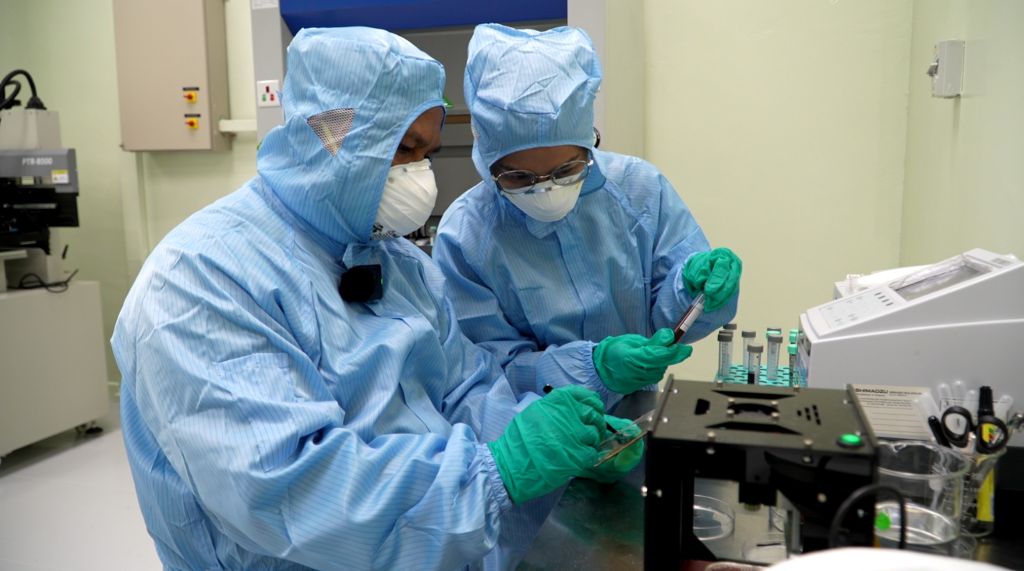
Through the strategic combination of graphite mapping techniques and origami folding on the device body, the UMPSA research team successfully developed a paper-based smart actuator film called ‘Paperbot’ that is capable of rolling on its own when exposed to continuous humidity.
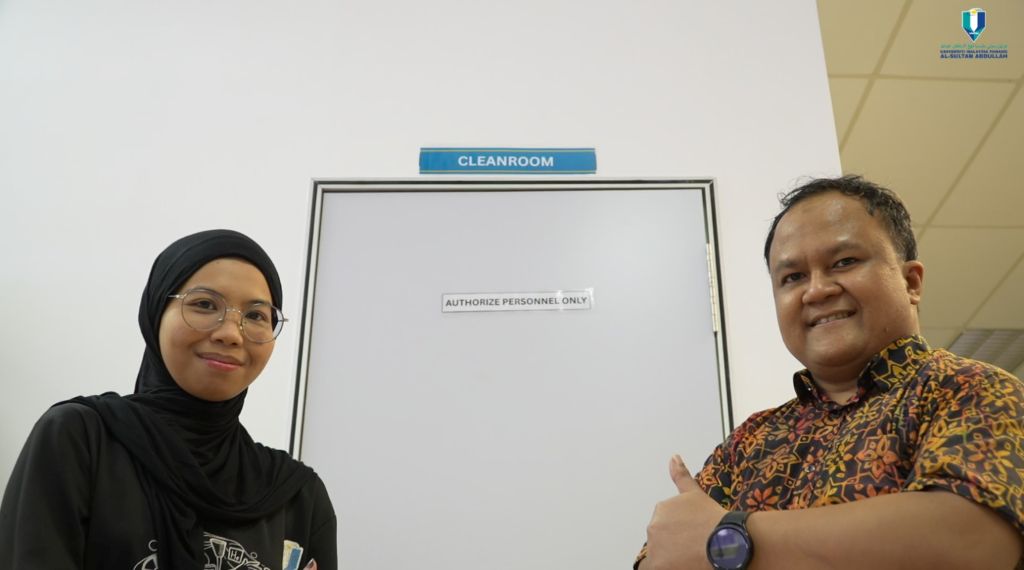
This project was also supported by the Director of the Centre for Advanced Intelligent Materials and also research member, ChM Dr Izan Izwan Misnon, Postdoctoral Fellow, Dr Abu Haniffa Abdullah, and Doctor of Philosophy postgraduate students, Ainizar Mustapa and Wan Farhana W Idris.
According to ChM Dr Izan Izwan, ‘Paperbot’ is capable of reaching a maximum speed of 8 mm/s (equivalent to 0.13 times its body length per second) and can be programmed to move along four different trajectories through specific design patterns.
“This capability opens substantial potential in the field of soft robotics, particularly for applications requiring flexible and autonomous movement in complex environments,” he said when explaining the speed and unique capabilities of this ‘Paperbot’.
For him, smart materials that can respond to stimuli such as humidity, heat, or light are gaining increasing attention because of their ability to function as sensors or actuators.
In addition, the use of humidity as an energy source is appealing, as water in vapour form always exists in the environment.
He added that many studies have shown that the expansion and contraction of soft materials due to changes in humidity can generate useful movement to drive small devices.
This advancement aligns with the requirements of future robotics and the agenda of the Industrial Revolution 4.0, especially in the development of lightweight, flexible, and energy-efficient actuators.
This discovery was published in the scientific journal Sensors and Actuators B: Chemical in July 2025.
It demonstrates the significance of the research and recognition as a reference at the international level.
It is also the first research in Malaysia to develop a mobile soft actuator based on paper using pencil and origami techniques.
At present, the team is developing a smaller version for the purpose of drug delivery or nanomaterial transport in confined spaces.
In addition, the group is focusing on the use of graphene as the main material in the next generation of robotics, with their actuator and graphene technology currently in patent-processing status.
This research also received university support through the UMPSA First in the World Flagship grant in line with the slogan ‘Technology for Community’ and strengthens the university’s position as a leader in advanced technology in Malaysia.
By: Mimi Rabita Abd Wahit, Centre for Corporate Communications
Translation by: Dr. Rozaimi Abu Samah, UMPSA Press
- 74 views
 Reports by: