
Study Local, Think and Act International: CACM Roadshow challenges students to rethink global readiness
PEKAN & GAMBANG, 13 – 14 April 2026 – In the first quarter of 2026, Universiti Malaysia Pahang Al-Sultan Abdullah (UMPSA) continues to advance its internationalisation agenda with strong momentum and enthusiasm.
Through the Centre for Academic Collaboration and Mobility, UMPSA successfully organised the Study Local, Think & Act International Roadshow, an Industry Panel and Mobility Sharing Session designed to encourage students to critically reflect on the value of international exposure and its relevance in today’s globalised workforce.
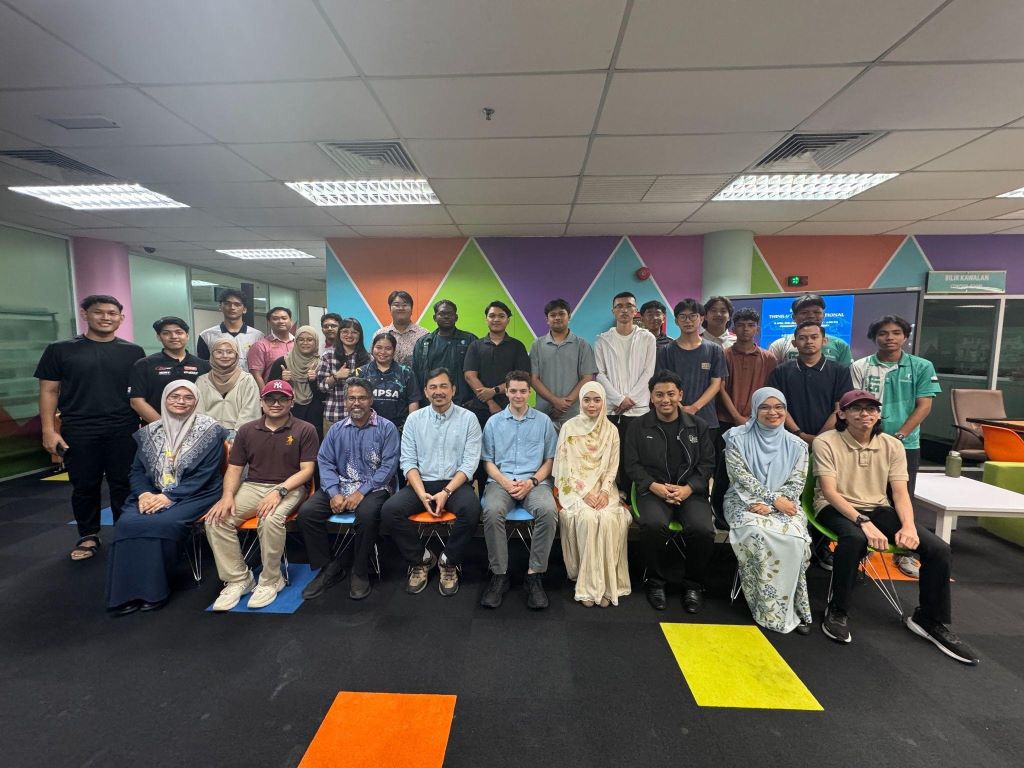
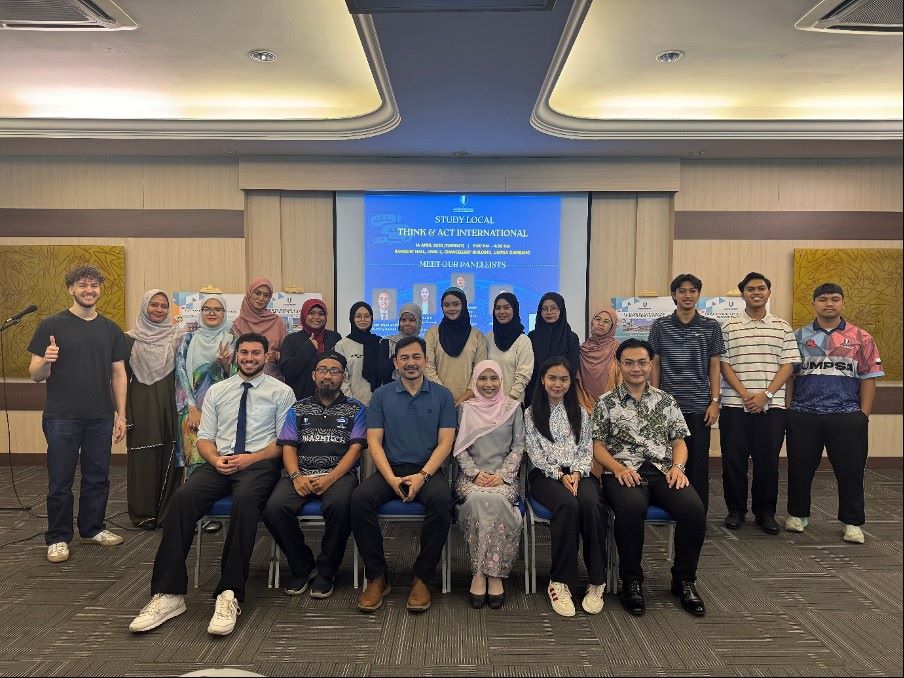
Held at UMPSA Pekan on 13 April and continued at UMPSA Gambang on 14 April, the programme recorded strong participation from students across multiple faculties, underscoring a growing institutional interest in internationalisation and its relevance to diverse fields of study.
At the Pekan campus, participants comprised students from the Faculty of Electrical and Electronics Engineering Technology, Faculty of Automotive and Mechanical Engineering Technology, Faculty of Manufacturing and Mechatronics Engineering Technology, and the Faculty of Computing.
At the Gambang campus, the audience included students from the Faculty of Chemical and Process Engineering Technology, Faculty of Civil Engineering Technology, Faculty of Industrial Sciences and Technology, Faculty of Industrial Management, and the Centre for Mathematical Sciences.
The wide academic representation was further strengthened by the diversity of students’ thinking styles, interests, and disciplinary approaches, ranging from highly technical problem-solving in engineering fields to analytical and systems-oriented perspectives in computing, management, and mathematical sciences.
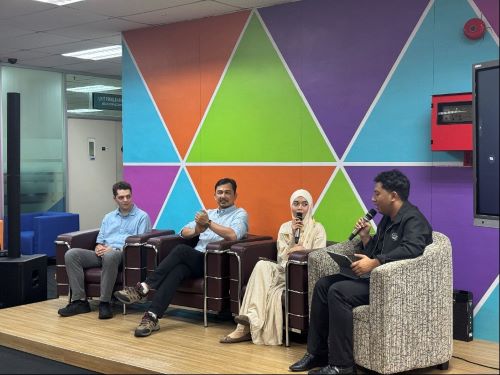
This diversity created a rich intellectual environment where students were able to observe how the concept of internationalisation is interpreted differently across disciplines.
Such diversity played a significant role in deepening discussions on global competence, as participants were exposed to contrasting viewpoints on innovation, communication, and future career pathways.
These interactions highlighted that internationalisation is not a one-dimensional concept but requires a broader understanding of how different disciplines contribute to global industries in interconnected ways.
The programme demonstrated that when students with varied academic and intellectual backgrounds engage in shared dialogue, it naturally expands their perspectives on the future workforce.
It reinforces the idea that global readiness is not only about geographical mobility, but also about the ability to integrate diverse ways of thinking, collaborate across disciplines, and respond to complex global challenges.
The industry panel session featured Senior Director at Infineon Technologies (Kulim, Malaysia), Jeffery Manaf, a leading global semiconductor company, who shared strategic insights on workforce expectations in multinational corporations (MNCs) and the critical importance of cultivating a globally oriented mindset.
He highlighted that success in MNC environments is no longer defined solely by technical expertise, but by how individuals think, communicate, and make decisions in a global context.
“In multinational companies, talent is expected to operate beyond local perspectives.
“Those who can quickly adapt, understand cross-cultural dynamics, and align with global standards will always stand out,” said Mr Jeffery.
He further emphasised that global thinking begins with everyday learning experiences, not only international travel.
“Global thinking starts with daily practice - how you solve problems, how you engage with diverse peers, and how open you are to perspectives different from your own.
“These are the foundations of success in MNC environments,” Mr Jeffery also noted that many graduates face challenges not due to a lack of technical knowledge, but due to limited global mindset readiness, particularly in communication, adaptability, and collaborative problem-solving across cultures.
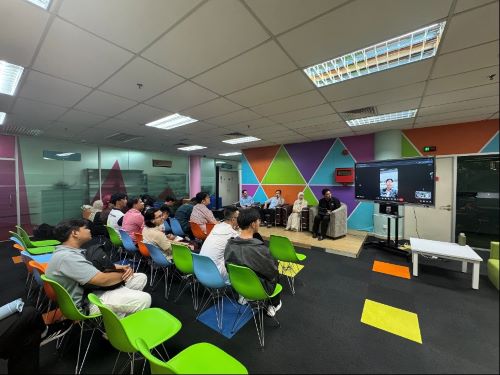
Meanwhile, a highlight of the programme was a surprise virtual appearance by current UMPSA outbound mobility students based abroad.
Bayu Hanafi Norhazilan, who is currently studying at Chonnam National University, Korea, joined the session live from Korea.
Imran Hakimi Oslan Affandi, who is currently at Karlsruhe University of Applied Sciences (HKA), Germany, also joined the session to share real-time reflections on his international experience.
The unexpected sharing added a dynamic and authentic dimension to the programme, reinforcing the immediacy of global learning experiences.
Moving beyond conventional sharing sessions, the roadshow encouraged participants to reflect on deeper questions, such as what it truly means to be globally competent, and whether international exposure alone is sufficient without reflective learning and mindset transformation.
The student sharing sessions featured outbound mobility alumni. Ain Najihah, who studied at Hanyang University ERICA, Korea, was among the speakers.
Ibrahim Ismail and Goo En Yi, who studied at TH Mannheim, Germany, also shared their experiences.
The session also included current inbound mobility students. Stier Leon Moritz Valentin from Karlsruhe University of Applied Sciences, Germany, and Salih Ucar from TH Mannheim, Germany, participated in the session.
Together, they provided complementary perspectives on international mobility experiences.
The alumni reflected on the challenges and personal growth experienced during their mobility journey.
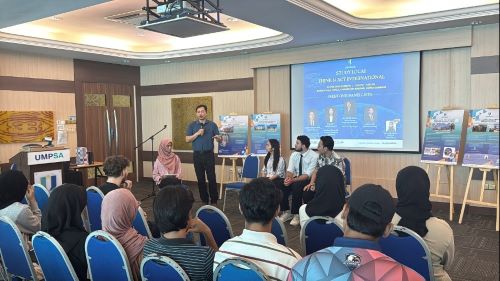
According to Ibrahim Ismail, studying abroad was not always easy.
“There were moments of uncertainty and discomfort, but those experiences taught me resilience and how to think independently.
“It changed how I approach problems and interact with people from different backgrounds,” he said.
Stier Leon shared insights from his inbound perspective, highlighting the importance of cultural exchange and mutual learning.
He said, being in Malaysia allowed me to see things from a different cultural perspective.
“It’s not just about adapting, but also about learning how to collaborate and respect differences,” said Stier Leon.
The roadshow also encouraged participants to consider how a global mindset can be developed locally, particularly for students who may not have immediate access to international mobility opportunities.
Emphasis was placed on cultivating intercultural awareness, openness, and reflective learning within everyday academic and social contexts.
Associate Deputy Vice-Chancellor (Academic and International Affairs), Professor Datin Ts. Dr. Mimi Sakinah Abdul Munaim, noted internationalisation goes beyond increasing outbound student numbers or mobility alone.
“It is a strategic educational imperative that encompasses inbound and outbound initiatives, the immersion of local students, and the strengthening of internationalisation at home.
“It aims to develop graduates who can critically interpret global complexity, engage constructively with diverse perspectives within and beyond their local environment, and transform both local and international experiences into meaningful, workplace-relevant competencies,” she said.
The initiative reflects UMPSA’s ongoing commitment to strengthening its internationalisation agenda by integrating industry insights with authentic student experiences.
Feedback from participants indicated a shift in perspective, with many recognising that global competence extends beyond borders and requires continuous personal and professional development.
Through the Study Local, Think & Act International Roadshow, organised by the Centre for Academic Collaboration and Mobility, UMPSA continues to reinforce its role in preparing graduates who are not only globally exposed but also critically aware, adaptable, and equipped with an industry-ready global mindset. This includes the ability to operate effectively within MNC environments, where cross-cultural communication, agility in diverse teams, and strategic thinking across borders are essential for long-term professional success. In an increasingly interconnected world, such competencies are vital in ensuring graduates are prepared not just to participate in the global workforce, but to thrive and lead within it.
By: Nur Ezzati Mohd Nasir, Centre for Academic Collaboration And Mobility
- 10 views