
From Letters to Literacy: Empowering Preschool Teachers to Implement the Warnakids English Reading Series Using the CREATIVE Approach
The importance of English proficiency in Malaysia has always been emphasized, more so in recent years, particularly in light of our national aspiration to remain globally competitive. English is not only a second language in our multilingual society but is also instrumental for accessing knowledge, communicating and negotiating, as well as creating opportunities locally and beyond national borders. As we look at efforts to improve English language education across all levels, one level that urgently requires attention would be early childhood educators.
Based on experience and observations, many early childhood educators in Malaysia are not trained in English language teaching. Some are school leavers with only Sijil Pelajaran Malaysia (SPM) qualifications and have had limited formal training in either English proficiency or English teaching pedagogy. While they may be experienced in managing young children and delivering care and basic education, their lack of English language competency poses a significant concern, especially in the context of early language development.
For early language acquisition and development, early childhood is indeed a critical period. Many studies have shown that children are highly receptive to language input during their early years, and that their linguistic and cognitive development is shaped by the quality of this input. When children are introduced to English at this stage, they begin forming the foundation for listening, speaking, and eventually reading and writing skills. For long-term language success, the foundation must be laid down effectively. Should the input be weak or inconsistent, the effects can be difficult to reverse in later years.
The reality in Malaysia is that many children in kindergartens and preschools are not receiving strong English input, particularly in private Malay medium kindergartens. This is not necessarily due to a lack of care or commitment from the educators, but rather their limited training and confidence in using English. Some educators may avoid using English in the classroom altogether, preferring to use Bahasa Melayu or even a mix of languages (code-switching), which may confuse learners. Others may attempt to use English, but with inaccuracies in pronunciation, grammar, or sentence structure, inadvertently passing on these errors to the children.
The implications of this are far-reaching. Firstly, children may develop fossilized errors—persistent mistakes that become embedded in their speech and are hard to correct later. Secondly, a weak foundation in English can affect their readiness for primary school, where English becomes a more formal part of the curriculum. Children who struggle with English from the beginning often continue to struggle throughout their schooling, affecting their academic confidence and overall performance. In the long term, this contributes to the broader national challenge of low English proficiency among Malaysian school leavers and graduates.
Moreover, these issues also reflect deeper concerns about equity and quality in early childhood education. In urban centres and private English medium preschools, children may have access to trained, English-speaking educators and immersive learning environments. In contrast, children in private Malay medium preschools, which are cheaper than English medium preschools, more affordable for lower-income families, may be taught by educators with little to no English language background and pedagogy.
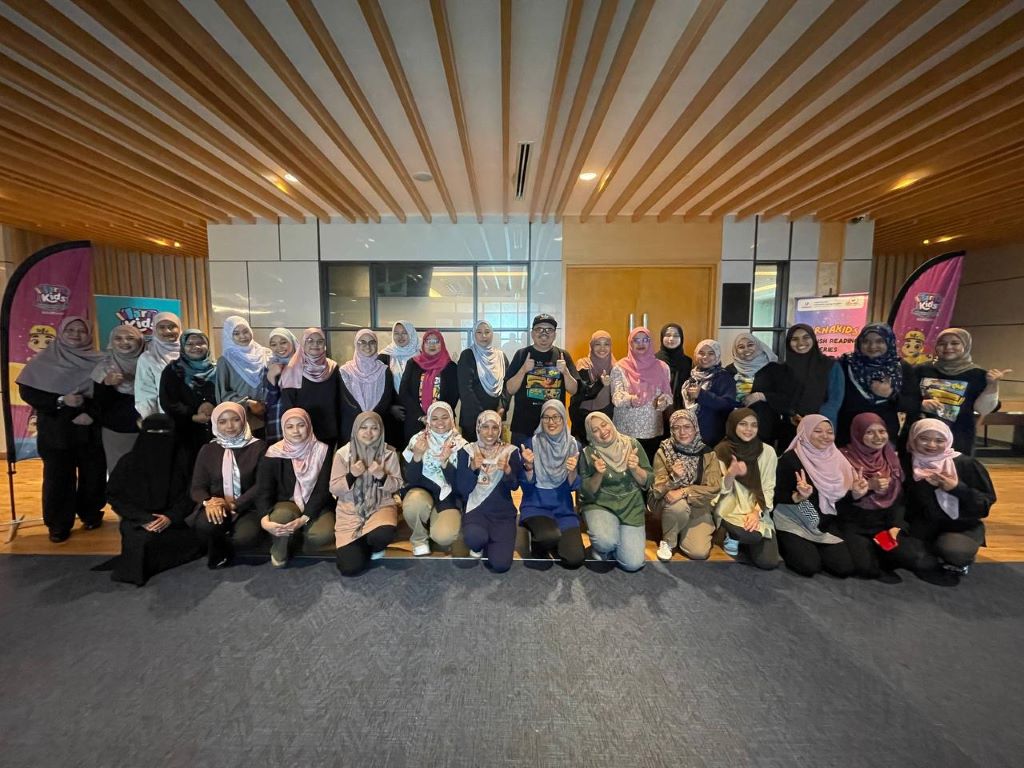
Recognising this urgent need, a special English language training programme for early childhood educators was held in collaboration with Warnakala Studios on 24–25 May 2025 at Shaftsbury Asteria, Cyberjaya. The programme, titled WARNAKIDS ENGLISH READING SERIES TEACHER TRAINING: THE CREATIVE APPROACH – FROM LETTERS TO LITERACY, aimed to empower educators with practical, engaging methods to introduce English confidently to young learners.
Warnakala Studios renowned for the beloved Didi and Friends series and has expanded its educational mission through the Warnakids Programme, first launched in 2023. Today, the programme is actively implemented in 35 kindergartens nationwide, bringing playful, story-rich, and creative literacy tools to classrooms across Malaysia. It is hoped that by 2026, the number of kindergartens will grow to more than 60 kindergartens nationwide.
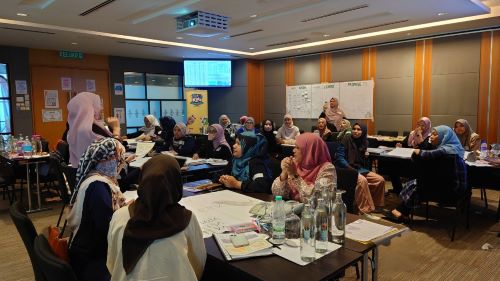
This initiative brought together a group of passionate and dedicated preschool teachers under the Warnakids Programme, some of whom had limited formal exposure to English beyond their secondary schooling. The training was designed to help teachers confidently use the new English Reading Series to guide children from recognising letters to developing full literacy skills. Covering practical communication, pronunciation, classroom phrases, and creative strategies such as songs, storytelling, and interactive games, more importantly, the programme introduced teachers to the recently launched ENGLISH READING SERIES, a series of five books that progressively build children’s knowledge from the English alphabet and its sounds to phrases, sentences, and short stories. By applying the CREATIVE approach, educators will be able to expand children’s vocabulary and strengthen their communication skills in a fun, meaningful, and systematic way.
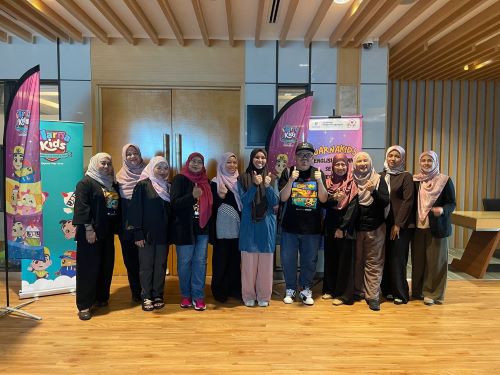
The CREATIVE approach is an innovative, research-informed framework designed to make language learning meaningful, engaging, and memorable. The approach is coined by Kindy Talk key founders, Assoc Prof Dr Noor Raha Mohd Radzuan and Dr Wan Jumani Fauzi, and their postgraduate student Aisyah Khaleeda Rosli, who are also cowriters of the Reading Series, alongside Warnakids, Ms. Nurshahidah binti Abd Jalil and Ms. Nur Shakinah binti Amir Zaimi. The acronym which stands for Contextualisation, Repetition, Extensive Input, Application, Thoughtful Reflection, Interaction, Varied Vocabulary, and Encourage Spontaneous Output illustrates an approach which aims to help learners discover the joy of language by immersing them in rich contexts, relatable stories, repeated practice, and interactive activities. It nurtures confidence through deep reflection, promotes active language use, and builds a broad vocabulary in realistic contexts—ultimately empowering learners to communicate naturally and fluently through the books in the English Reading Series. When used effectively, educators can inspire learners to master language in a way that is meaningful, engaging, and fun by immersing them in a world of words. With the help of vibrant illustrations, they can watch children’s skills blossom with every page turned. The training encourages educators to use these pages purposefully and flexibly, adapting the focus to suit different levels of learners so that each child benefits from a tailored language experience.
The training was hands-on, contextual, and tailored to their teaching environment. Participants were encouraged to overcome their fear of using English by engaging in role-plays, chants, and group activities that reflected real classroom situations. Importantly, it was not just about improving language accuracy, but about building confidence and creating a positive mindset towards using English in the classroom. Many of the educators reported feeling more empowered and motivated to incorporate English in their daily routines with children.
This kind of professional development is essential, not just a one-off effort, but part of a continuous journey to uplift the quality of early childhood education in Malaysia. With the right support and training, early childhood educators can become effective language models and facilitators. Providing English language training is not just about improving their language skills, it is about equipping them with strategies, confidence, and creativity to nurture a new generation of English-speaking Malaysians.
Policy-makers, education providers, and stakeholders must recognize that the future of English language education in Malaysia begins at the preschool level. Investments in primary and secondary school English programmes are important, but they will not reach their full potential unless we strengthen the foundation. By focusing on early childhood educators, particularly those who are currently under-qualified in English, we address the issue at its root.
In conclusion, the role of early childhood educators in English language education is critical and often underestimated. Their daily interactions with children during the most formative years can either support or hinder the development of English language skills. As such, ensuring that they receive proper English language training is not a luxury, it is a necessity. The recent collaboration with Warnakala Studios is just one example of how targeted training can make a difference. If we are serious about raising the standard of English in Malaysia, we must start with those who shape our children’s earliest learning experiences. The future of our nation's English proficiency depends on the actions we take today.

By: Associate Professor Dr. Noor Raha Mohd Radzuan
E-Mail: nraha@umpsa.edu.my
Senior Lecturer
Centre for Modern Languages (CML)
Universiti Malaysia Pahang Al-Sultan Abdullah (UMPSA)

By: Dr. Wan Jumani Fauzi
E-Mail: jumani@umpsa.edu.my
Centre for Modern Languages (CML)
Universiti Malaysia Pahang Al-Sultan Abdullah (UMPSA)

By: Dr. Ezihaslinda Ngah
E-Mail: ezi@umpsa.edu.my
Centre for Modern Languages (CML)
Universiti Malaysia Pahang Al-Sultan Abdullah (UMPSA)

By: Aisyah Khaleeda Rosli
Centre for Modern Languages (CML)
Universiti Malaysia Pahang Al-Sultan Abdullah (UMPSA)

By: Liliyati Mohamad Yusof
Warnakala Studios
- 144 views