
The Two Fingers: Why Caring for Orphans Sits So Close to the Heart of Islam
Imagine a child who, almost overnight, loses the person who made the world feel safe. Along with grief come quieter losses: the steady income that paid for school fees, the hand that guided homework, the voice that said you matter. What happens next depends largely on the people around that child.
In Islam, that responsibility is clear. Caring for an orphan is not a kind deed to be done only when convenient, or only in season. It is a sacred trust, and the whole community shares it.
That message lies at the heart of the Pahang State Friday sermon of 23 October 2026, Mendidik Anak-anak Yatim. Its central idea is simple and demanding: orphans deserve to be raised with empathy, dignity and guidance and their wellbeing is everyone’s business.
Who Counts as an Orphan?
The sermon defines an anak yatim as a child who has lost a father, a mother or both before reaching puberty, or before being able to stand on their own. In classical Islamic law, the term yatim refers more strictly to a child whose father has died before puberty.
Either way, the loss can leave a child without protection, emotional support or the means to meet daily needs. Islam does not ask the community to look on with sympathy. It asks the community to act, so that orphans feel welcomed and have a real chance to learn and thrive.
What the Qur’an and the Prophet Teach
The Qur’an returns to orphans again and again and its tone ranges from gentle encouragement to sharp warning.
Surah al-Baqarah (2:220) urges believers to improve the lives of orphans and reminds them that orphans are their brothers in faith.
Surah al-Ma’un (107:1–3) condemns the one who denies the religion and names his mark: he drives the orphan away. The sermon draws the lesson plainly. Neglecting or mistreating orphans reveals a defect in one’s faith in the Day of Judgement.
Surah al-Insan (76:8) praises those who give food to the needy, the orphan and the captive, despite their own love for it.
The Prophet Muhammad (peace be upon him) made the reward unforgettable with a single gesture. In a hadith narrated by Imam al-Bukhari, he said that he and the one who cares for an orphan will be together in Paradise like this, and held up his index and middle fingers. The sermon also cites a hadith narrated by Ibn Majah: the best house among the Muslims is one in which an orphan is treated well, and the worst is one in which an orphan is mistreated.
No Two Orphans Have the Same Needs
Care has to begin with the child’s actual situation and money is part of that picture.
Some orphans inherit wealth from their parents. The sermon is clear that such children are not among those eligible for zakat. Their inheritance brings a different responsibility: guardians must hold and manage it honestly until the child is mature enough to take charge. The Qur’an is stern on this point. Surah al-Nisa’ (4:10) warns that those who unjustly consume an orphan’s wealth are swallowing fire into their bellies.
Other orphans have little or nothing. They are eligible for zakat and should be helped in every way possible, from daily needs to education. In both cases, the guiding question is the same: what does this child need to flourish?
Raising a Whole Person
Food and clothing keep a child alive. They are not enough to help a child grow. As the sermon notes, Imam al-Nawawi described caring for an orphan as managing their affairs, providing for and clothing them, disciplining them, and educating them in matters of this world and the Hereafter.
That preparation has three strands:
Faith. Religious education introduces the child to the Qur’an, prayer, belief, worship and good character.
Skills. Academic learning and practical abilities open doors to further study and work. The sermon pictures orphans growing into scholars, doctors, teachers, engineers, lecturers and entrepreneurs who contribute to society.
Heart. Emotional and moral support builds confidence and self-worth. Orphans must never be belittled until they feel inferior.
The third strand is easily overlooked. An orphan should never be made to feel like a charity case or a lesser member of the household. Respect is part of care.
It Takes a Community
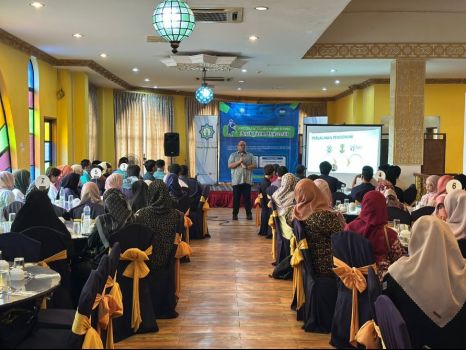
No guardian should carry this responsibility alone. The sermon names welfare homes, families and heirs, the wider community, educational institutions and mosques; in the end, the whole Muslim community. Institutions such as zakat and waqf can channel resources to the children and families who need them most.
Help can take many forms. The sermon urges each of us to give what we can: sharing knowledge, spending time with orphans and standing up for their rights, consistently rather than only in season. Those who give zakat or contribute to waqf should do so through official, authorised channels, so that the help reaches the children it is meant for.
The Measure of a Community
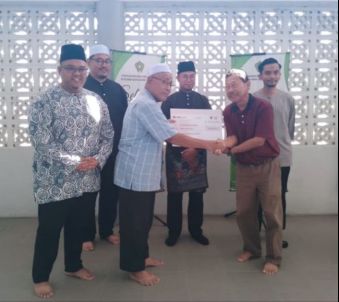
Caring for orphans means protecting their wellbeing, investing in their education and treating them with compassion and dignity. Guardians hold that trust first, but the community holds it too.
When that trust is honoured, an orphan has a far better chance of growing into a capable, confident adult. And the community that raised them becomes kinder for having done it. Two fingers, held side by side, show how close that reward lies.
The author is a lecturer at the Centre for Human Sciences (PSK), Universiti Malaysia Pahang Al-Sultan Abdullah (UMPSA), where he is responsible for translating Friday sermons and preparing the accompanying presentation slides.
By: Ahmad Ibrahim
Email: ahmadbi@umpsa.edu.my
- 7 views
 Reports by: