
Unlocking student potential through Substitute Blended Learning (SBL)
Lockdowns and isolations during the COVID-19 pandemic had forced people to learn out of necessity. Some resorted to YouTube to make their own bread or kimchi. What started out as a scary situation was turned into proud moments, with people sharing their amazing success and journey of making their own bread from A to Z on social media. The pandemic strengthened the idea that learning new skills does not always require a traditional classroom or a face-to-face-instructor.
SBL or Substitute Blended Learning merges online activities with traditional face-to-face interactions. At UMPSA, structured online learning is set between the range of 30-80% of Student Learning Time (SLT). In practice, programmes may allocate approximately 30% of SLT for online learning activities, while up to 80% of the remaining learning time is conducted through face-to-face interactions, depending on course design and learning outcomes. Imagine students diving into subjects online with the same enthusiasm the people had for baking bread. With the right online resources and a bit of curiosity, SBL can be just as successful, or could it not? In the academic context, particularly in English language teaching, will we be able to see success like the triumph of learning to bake online?
SBL allows students flexibility in learning and is also implemented in many courses offered by the Centre for Modern Languages, such as in the ULE2332 (the former course code was UHL2422) English for Technical Communication (ETC). Students get to learn anytime and anywhere while still benefitting from interactive classroom experiences. Students have access to course instructors personalised and recorded video lessons, interactive media such as YouTube videos, online activities conducted via Padlet and Edpuzzle, as well as online quizzes such as via Kahoot! and Wayground (formerly known as Quizizz).
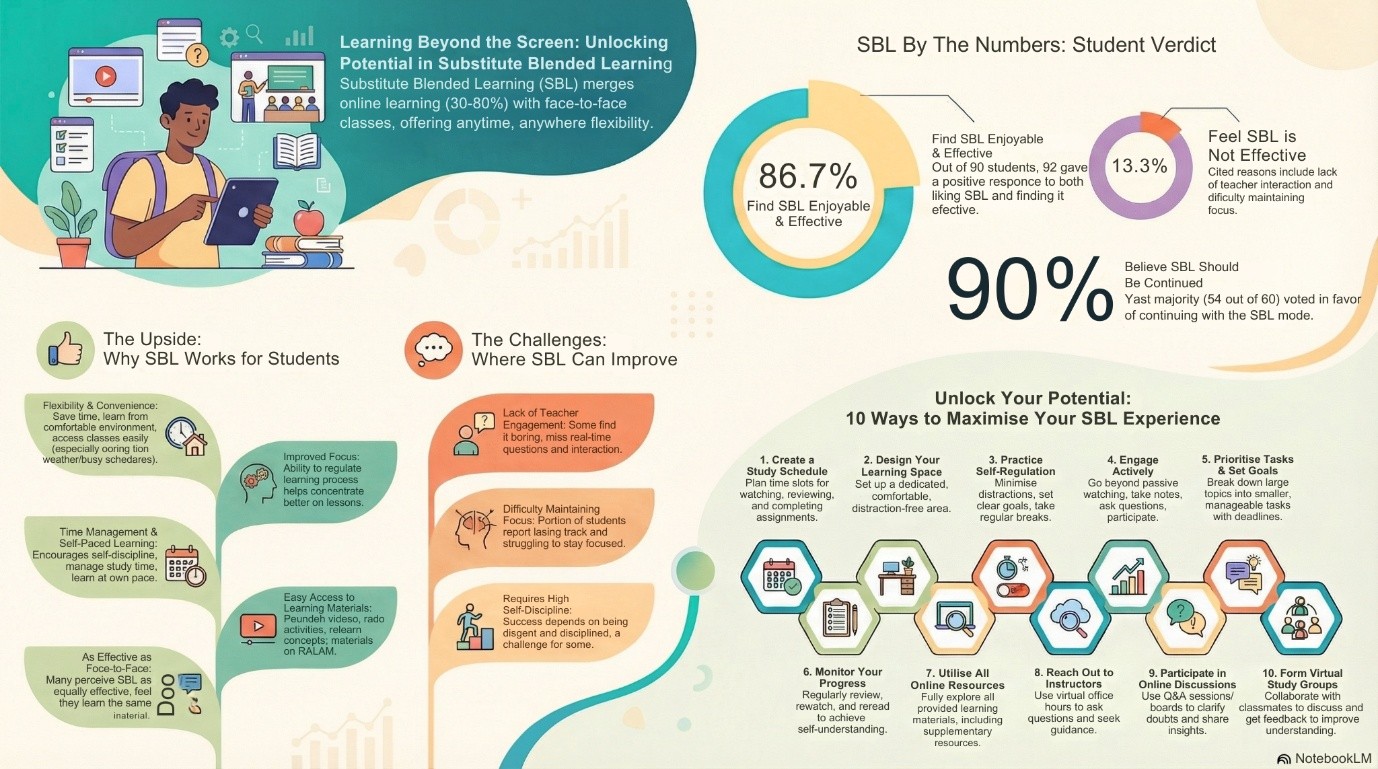
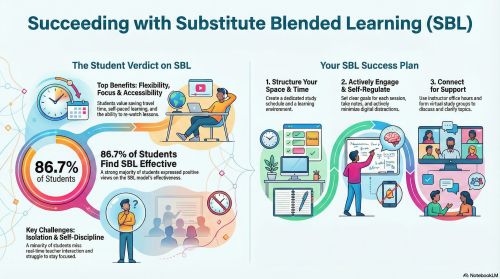
Recently, action research (PBM22037) was conducted to examine the ETC students' perspectives on SBL mode conducted for the course, and how SBL influences their learning experience. The results from the study reveal SBL is gaining significant traction among the ETC students, with a majority (86.7%) expressing positive views on its effectiveness. The students highlight that SBL provides flexibility and convenience, better focus, time management and self-paced learning, accessibility of learning materials, and equal effectiveness as face-to-face classes.
SBL Top Benefits
1) Flexibility and convenience
Students found SBL effective because it saves time, more flexible, and is better for students facing difficulties traveling to physical classes, especially during bad weather. Online learning offers flexibility in scheduling, allowing learners to access materials and participate in activities at their own pace and time, making it convenient for busy schedules. Many students also found it more comfortable to study in their own environment.
2) Increased learning focus
SBL helps students to concentrate especially since they can regulate self-learning, allowing them to focus more on their learning process as well as the completion of assigned tasks. Moreover, the structured design of online learning activities reduces common classroom distractions, thereby supporting sustained learner attention throughout the learning process.
3) Time efficiency and self-paced learning
SBL also promotes self-paced learning where students can cultivate self-discipline and manage their time in learning. It encourages students to become “project manager” in managing their study time and learn by themselves at any time.
4) Accessibility of learning materials and activities
Students appreciate being able to rewatch, redo and relearn during this learning mode. Online learning allows them to review learning materials such as the recorded lessons when they do not understand, and students can reread and practice more during the class. Learning materials are also easily accessible in various platforms especially in the course learning management system such as Knowledge & Learning Management System (or known as KALAM).
5) Comparable effectiveness to face-to-face learning
Some students positively perceived SBL as comparable to the physical, traditional face-to-face class as they felt the lessons were similar, and they continued to learn new knowledge regardless of the learning mode. The main difference is in the preparation required, where attending face-to-face classes require physical attendance, while SBL requires students to get their digital devices ready for online synchronous or asynchronous sessions.
SBL Challenges
Despite the positive responses, a small percentage of students (13.3%) felt SBL mode was not effective. These students were not fond of SBL mainly because it lacks teacher engagement and interaction. Some students found SBL more boring than face-to-face classes because it limits their ability to interact and ask their teachers questions in real-time. This limitation results in fewer opportunities for students to seek consultation on the difficulties they face. On the other hand, some students reported that they could not focus and lost track during the self-paced learning mode, where they also felt that a higher level of disciplined and diligence was required to succeed in SBL mode. These insights suggest that improving teacher-student interaction and incorporating more engaging elements into SBL could further enhance its effectiveness.
10 Ways Students Can Maximise their SBL Learning Experience
Drawing on the experiences and perspectives of ETC students regarding Substitute Blended Learning (SBL), here are 10 ways students can improve their SBL experience:
1) Create a study schedule
Students can plan their study time effectively by creating study schedules that fit their individual needs and commitments, making the most of the flexibility to learn at times that are most convenient and when they are most focused. It is also recommended that students allocate specific time slots for reviewing video lessons and completing assignments.
2) Create a comfortable learning environment
As some students noted the comfort of learning in their own environment as a benefit, students should aim to set up a dedicated, comfortable and distraction-free study space to enhance their focus and engagement. To increase concentration, students could also use noise-cancelling headphones or have calming background music during learning.
3) Practice self-regulation and minimise distractions
Developing self-discipline is crucial in a flexible learning environment. Students can set specific learning goals for each study session and take regular breaks to maintain concentration. They should also actively work to reduce distractions in their learning environment, such as social media, noise, and interruptions. In addition, students should also regularly reflect on their learning habits and adjust strategies accordingly.
Afterall, this critical self-pace mode highlights the importance of student-driven learning in ensuring the success of SBL. As Zig Ziglar once said, “If you are not willing to learn, no one can help you. If you are determined to learn, no one can stop you”.
4) Actively engage with learning materials
If provided with video lessons, students should avoid passive watching and instead engage actively with the content. This could include taking notes and participating in any online forums or discussions available during SBL to help maintain focus. Additionally, students are strongly encouraged to ask questions, if possible, through the designated lesson platform, such as YouTube, by using the comment section.
5) Set realistic goals, prioritise tasks and manage deadlines effectively
Students should identify the most important learning activities and allocate time accordingly based on the priorities. Aside from that, they should also break down learning materials into smaller, manageable tasks with deadlines to stay on track. This approach helps them to focus their time and energy where they matter most, while maintaining steady progress through achievable milestones.
6) Monitor progress and review materials as needed
It is also advisable that students regularly review learning progress and adjust their study plans as needed. They should take full advantage of the ability to rewatch lectures and reread materials to reinforce their understanding.
7) Utilise available online resources
Students should also explore learning materials provided online especially the compulsory ones and make use of any supplementary resources or exercises to enhance understanding. Additionally, effective use of these online resources can help students reinforce key concepts and develop greater autonomy in their learning.
8) Revisit challenging topics and reach out to instructors during virtual office hours
Some students noted a lack of teacher engagement as a drawback. To mitigate this, if virtual office hours are available, students should take full advantage of the opportunities provided by their instructors to actively engage with the instructors. They can ask questions and seek guidance from the instructors, particularly when encountering difficult concepts.
9) Actively participate in online discussions or Q&A sessions
If the SBL format includes opportunities for online interaction, whether formal or informal, such as in online forums or Q&A sessions in the class WhatsApp/Telegram group, students should actively participate to clarify doubts, share insights with their instructors and peers, and engage more deeply with the content. Active participation also helps foster a sense of learning community and encourages more meaningful interaction in the online learning environment.
10) Form study groups
Collaborating with peers can provide opportunities for discussion and peer-to-peer learning, partially compensating for a lack of direct teacher interaction. Being in SBL mode on their own does not mean students are supposed to be alone in their learning journey. For instance, students can form virtual study groups to enhance collaborative learning and participate in peer feedback sessions to improve understanding during SBL.
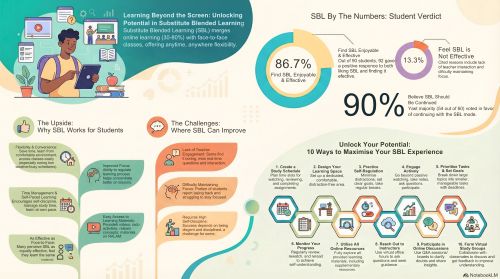
Having SBL in our education system is like ordering a DIY Science, Technology, Engineering, and Mathematics (STEM) kit at home, where the flexibility of having the self-pace learning, anywhere and anytime is like having the freedom to build the kit whenever you desire at home. However, the downside of limited teacher-student interaction is like struggling with a complex piece of the model without available assistance from its blueprint expert.
Therefore, even though the process is largely self-directed, students can enhance their learning experience by consciously implementing interaction and support strategies (such as the reaching out during virtual office hours and forming study groups). These approaches help leverage the strengths of SBL while addressing its potential challenges, ultimately maximising the students learning experience and outcomes. Positive perceptions of flexibility, convenience, and accessibility, along with the potential for self-directed learning, indicate that SBL can be a highly effective learning mode when students actively engage with its unique characteristics.

By: Nurkarimah Yusof
Senior Language Teacher
Centre for Modern Languages (CML)
Universiti Malaysia Pahang Al-Sultan Abdullah (UMPSA)
E-mail: nurkarimah@umpsa.edu.my

By: Dr. Wan Jumani Fauzi
Lecturer
Centre for Modern Languages (CML)
Universiti Malaysia Pahang Al-Sultan Abdullah (UMPSA)
E-mail: jumani@umpsa.edu.my

By: Nabila Abdul Malek
Senior Language Teacher
Centre for Modern Languages (CML)
Universiti Malaysia Pahang Al-Sultan Abdullah (UMPSA)
E-mail: nabilaam@umpsa.edu.my

By: Farah Liyana Ahmad A’azmey
Senior Language Teacher
Centre for Modern Languages (CML)
Universiti Malaysia Pahang Al-Sultan Abdullah (UMPSA)
E-mail: farahliyana@umpsa.edu.my

By: Associate Professor Dr. Noor Raha Mohd Radzuan
Centre for Modern Languages (CML)
Universiti Malaysia Pahang Al-Sultan Abdullah (UMPSA)
E-mail: nraha@umpsa.edu.my
Note: The content of this article is based on an action research study (PBM22037: Student Feedback on UHL2422 English for Technical Communication Substitute Blended Learning (SBL) KALAM Online Learning Materials) conducted by the authors, who are English language instructors at the Centre for Modern Languages, UMPSA.
- 118 views
 Reports by: