
UMPSA JoC students bring quiet dedication to iFUTURE 2026
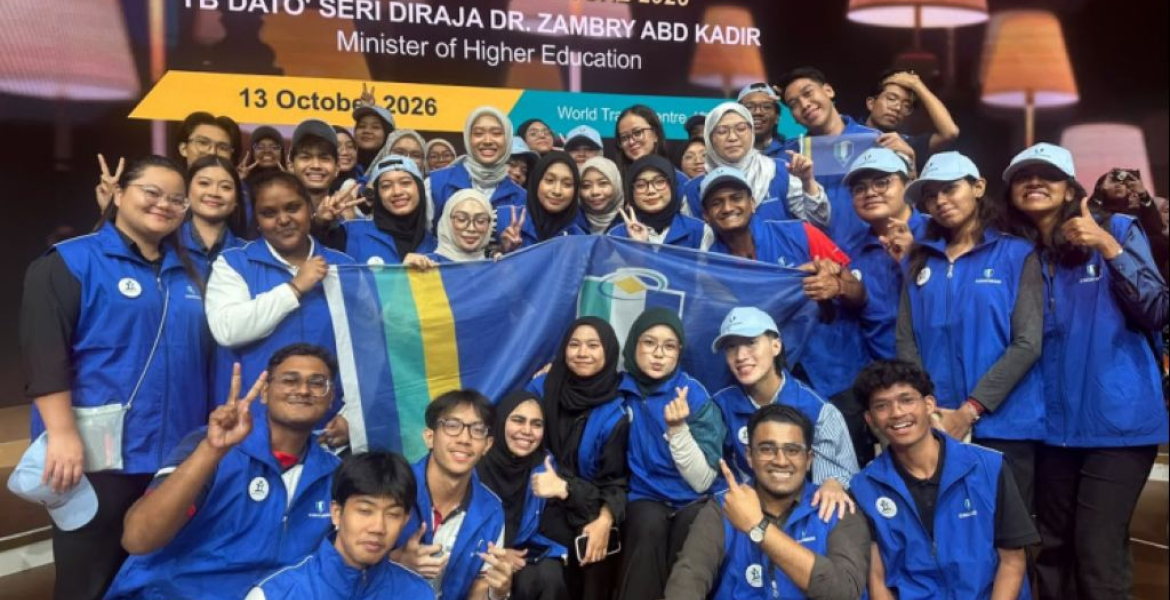
KUALA LUMPUR, 13 October 2026 – Guiding participants, supporting event operations and taking responsibility on stage, students from Universiti Malaysia Pahang Al-Sultan Abdullah (UMPSA) devoted their time and energy to helping deliver the International Young Future Leaders Summit (iFUTURE) 2026 at the World Trade Centre Kuala Lumpur.
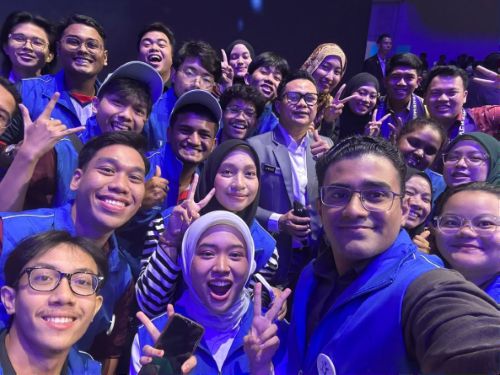
Among those supporting the summit were 50 students involved through MySISWA Job on Campus (MySISWA@JoC). For the students interviewed, the opportunity brought real responsibilities, unfamiliar situations, and lessons that extended beyond the classroom.
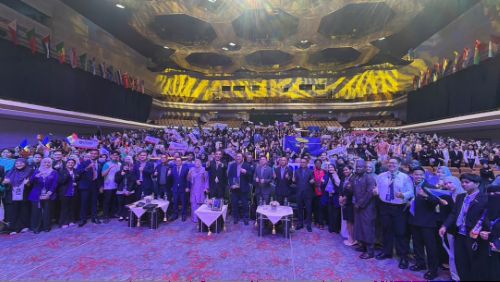
The summit brought together 1,231 students, with UMPSA serving as the lead university in an initiative of the Ministry of Higher Education through the Department of Higher Education and Yayasan Perkasa Siswa.
Within that larger undertaking, students contributed through roles that connected the programme with the people attending it.
For Subashini Sangaran, a third-year Industrial Technology Management student at the Faculty of Industrial Management, contributing began with a willingness to try.
“More than just adding experience to my resume, I wanted to grow and prove to myself that I am capable of doing more,” she said.
Serving on the Registration and Protocol Committee from 10 to 13 October, Subashini managed prize distribution, led an Explorace checkpoint, and later served as an usher, guiding guests and assisting with event arrangements.
Leading the checkpoint became a particularly meaningful experience.
She took responsibility for explaining activities and helping participants understand what they needed to do.
“It taught me that even a small role can make a meaningful difference to a programme,” she said.
The experience also helped her recognise a change in herself.
Having previously hesitated in unfamiliar situations, she found that she could approach strangers, guide others, and take initiative with greater confidence.
Taking responsibility in several capacities was also central to Muhammad Izzuddin Muhammad Rahmat’s involvement.
The third-year Bachelor of Industrial Technology Management (Honours) student from the same faculty served as head facilitator, emcee, and host from 10 to 14 October.
His involvement followed his JoC placement at the UMPSA Career Centre, which began on 27 July 2026.
There, he supports graduate employability initiatives, cleans and updates employability data, and assists with student coordination.
For Mohammad Azhar Jailani, a third-year Chemical Engineering student from the Faculty of Chemical and Process Engineering Technology, joining an international programme fulfilled a longstanding aspiration.
“I decided to participate in iFUTURE because it is an international-level programme, and taking part in an event of this scale has always been a dream of mine,” he said.
He contributed as a singer at the opening and closing ceremonies, alongside his involvement in JoC under the Student Affairs and Alumni Department (JHEPA).
His wider event involvement ran from 8 to 14 October, while his JoC duties covered 10 to 14 October.
Those duties included assisting officers with operational tasks, managing crowd flow, and helping participants follow the programme itinerary.
His contribution extended across both performance and event support, each requiring him to carry out the tasks entrusted to him professionally.
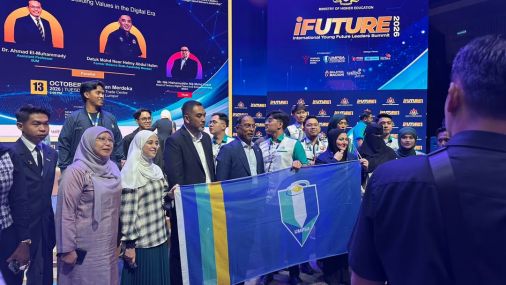
Fazrul Farhan Fakhrul Muzamal, a second-year Industrial Chemistry student from the Faculty of Industrial Sciences and Technology, contributed through a media role during a three-day JoC assignment.
“What inspired me to join iFUTURE and apply for JoC was the desire to step out of my comfort zone and gain practical, hands-on experience beyond academic learning,” he said.
He also hopes to develop stronger interpersonal skills through the experience.
Meanwhile, the commitment involved had to be balanced with university life as Subashini acknowledged that managing studies, work, and programme commitments could become challenging when responsibilities overlapped.
She described prioritising tasks, planning her time, and communicating when she needed help.
Support from teammates and supervisors also mattered, reminding her that she did not have to manage every challenge alone.
Her account gives a personal dimension to JoC’s purpose.
The university’s structured part-time work initiative offers students income alongside practical experience, while emphasising reasonable working hours and the protection of academic commitments.
Across the four accounts, the students’ contributions become visible in specific tasks: a checkpoint explained clearly, a guest guided, a programme hosted, or an operational duty completed.
These responsibilities formed part of the collective effort that supported iFUTURE 2026.
The students gave their time and effort to work that others depended on.
In return, they were entrusted with opportunities to practise communication, exercise responsibility, and discover where they could contribute.
For Subashini, that experience has strengthened her interest in communication and coordination, skills she hopes to carry into her future career.
She also hopes the university will continue offering accessible opportunities with proper guidance so that more students can develop beyond the classroom.
Her encouragement to those still unsure about getting involved is simple.
“My advice is to give yourself a chance, even if you feel nervous or inexperienced.
You do not have to be fully prepared to start learning and growing,” she said.

By: Neellesh Ram Saravanan, Faculty of Electrical and Electronics Engineering Technology
- 78 views
 Reports by: